
Successful festival premiere
Eplan Next26: Inspiring insights into the future of engineering.
www.eplan.com
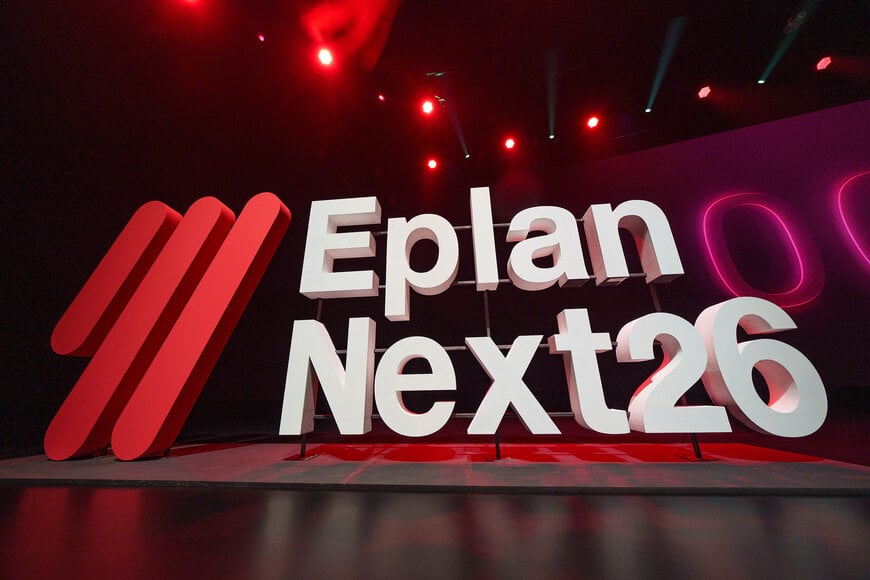
Around 1,500 attendees from 36 countries, renowned keynote speakers, fascinating panel discussions and interesting insights into the future of engineering, automation technology and the industry overall is the best way to describe the first Eplan Next conference, which took place in Munich’s Cavalluna Park on 20 and 21 May. Not only did Eplan Copilot and Eplan Smart Sourcing celebrate their premieres – attendees also got a sneak peek of the upcoming Eplan Platform 2027. High-profile speakers, experts from Eplan, users, decision-makers and Eplan business partners engaged in intensive discussions about the hottest topics for the engineering of the future during the two-day festival.
What changes are in store for electrical engineering in the coming years? Which next steps in automation will the industry be facing? How will artificial intelligence influence engineering? These and other questions were answered by internationally recognised experts in a variety of presentation formats at the Eplan Next26.
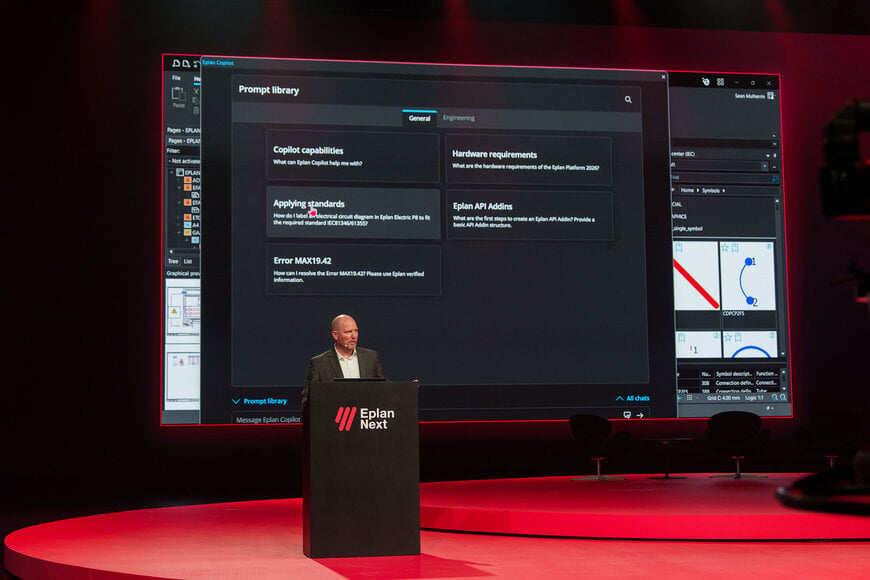
Eplan CEO Sebastian Seitz set the tone in his opening address: “We are giving you a taste of what’s to come. Here at Eplan Next, we need to discuss one of the greatest challenges facing our shared industry, namely the digitisation of our entire value creation process.” When presenting the new AI, which takes a different approach than many other industrial AI applications – in part due to its protecting of intellectual property – Seitz said: “Today we are launching out Eplan Copilot in the cloud environment.” He emphasised the importance of data security, the AI’s robust architecture, and the long-term goal of making workflows truly autonomous. “We need to contribute a great deal of knowledge and build the right skill sets into the AI, not just to automate processes, but also to autonomously control them. Our goal is to develop this technology so that it evolves from a copilot to a pilot.”
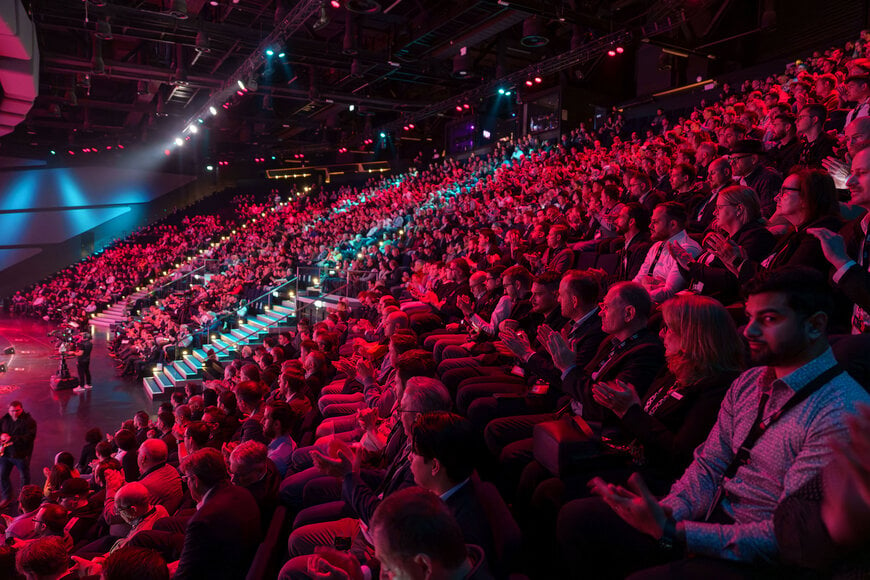
Around 1,500 participants from 36 countries were in attendance, listening attentively to the keynotes and panel discussion on the main stage.
Insights into the industrial production of tomorrow
Attendees from around the globe were able to gain first-hand experience as to how leading industry innovators such as DMG MORI, Eaton and Siemens are preparing for the challenges of the future and which tools the special machine builders and control cabinet manufacturers already use today to succeed in the competitive landscape of tomorrow.
In his keynote, Siemens Digital Industries COO for Automation Business and CTO Rainer Brehm identified the shift from rule-based to goal-based automation as the next step. For instance, this can be achieved with an end-to-end, AI-based Advanced Machine Engineering, which Siemens is developing in close cooperation with Eplan.
In his keynote, DMG MORI Group President and CEO Dr.-Ing. Masahiko Mori introduced DMG MORI’s “Machining Transformation” initiative, and also referred to its collaboration with Eplan toward realizing a digital twin in the field of control cabinet design.
Eaton Operations Director Power Distribution Systems China Andy Lee offered attendees fascinating insights into a showcase factory for extensively automated control cabinet manufacturing in Changzhou, China. There, too, the Eplan Platform is being used as the backbone for electrical engineering and humanoid robots are auditing the connected wires.
Future Lab: Experiencing the future live, in person
The Future Lab featured groundbreaking new developments as well as a range of future technologies – for instance an auto panel design tool that generates a basic mounting panel design direct from an initial bill of materials. Using this as the foundation, a suitable housing can be selected and a reliable cost estimate produced with minimal effort, even during the bidding phase. Another highlight was a software supported production workstation that enables even less-experienced employees to build control cabinets to a very high quality standard – reliably, transparently and in compliance with all individual customer requirements. Topics including the Siemens Teamcenter integration and advanced machine engineering were also presented at the Future Lab – creating a direct link between mechanical engineering, product data management (PDM) and electrical control technology (CAE/TIA).
Looking back and gazing ahead: The Eplan Platform 2027 & Smart Sourcing
Eplan used the event for an exclusive preview of the new Eplan Platform 2027, the development of which has incorporated around 500 customer requirements. It’s been designed to further accelerate electrical engineering projects across three process stages: preplanning, electrical engineering and control cabinet engineering. In terms of component procurement, Eplan Smart Sourcing also offers a new and highly automated solution that celebrated its German premiere at the Eplan Next26. One practical benefit is that the tool makes it clear during the design phase where and how quickly the required parts can be sourced. In various Master Classes, users were able to explore the software’s new features and topics including control cabinet design, efficient machine cabling, and digital product structuring.
The trends of standardisation and cooperation
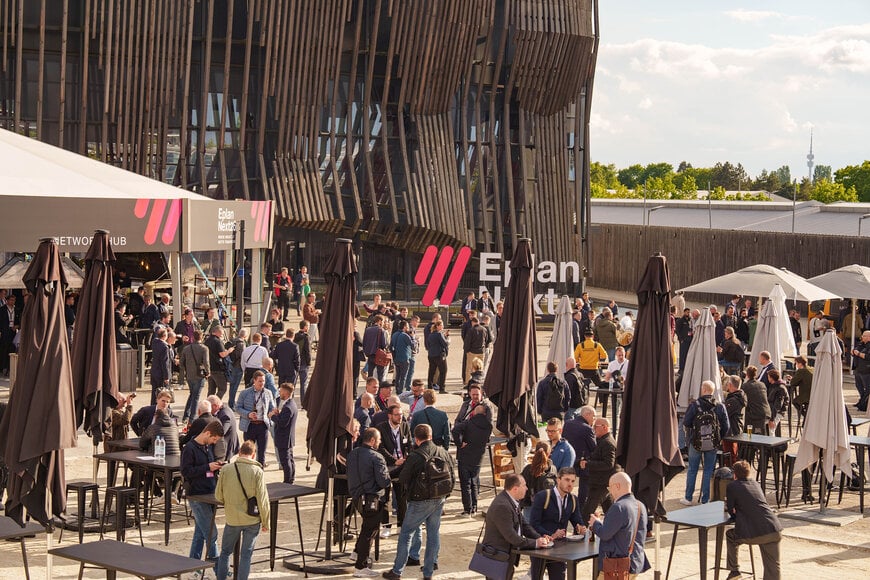
On the Partner Plaza, a supporting specialist trade exhibition, more than twenty companies – including ABB, Phoenix Contact, Rittal, Rockwell Automation, Siemens and Weidmüller – showcased their innovations designed to simplify and automate engineering within the Eplan ecosystem. Data consistency played a key role here and it is becoming clear that only these intelligent connections make it possible to implement the complete digital twin in engineering. As several speakers emphasised, the Asset Administration Shell (AAS) is increasingly playing a central role as a standardised transmission channel.
Conclusion: A successful start that is to be continued
At the close of the two-day event, Sebastian Seitz drew an all-around positive conclusion: “This was a successful start. Many of our partners who took part in the panels and discussions have underscored that the future lies in cooperation and collaboration – this is the only way we can master the challenges of the future. The technologies are available. The crucial question is how we can consistently integrate these opportunities into our processes. This is something we are looking forward to discussing more at the Eplan Next27.”
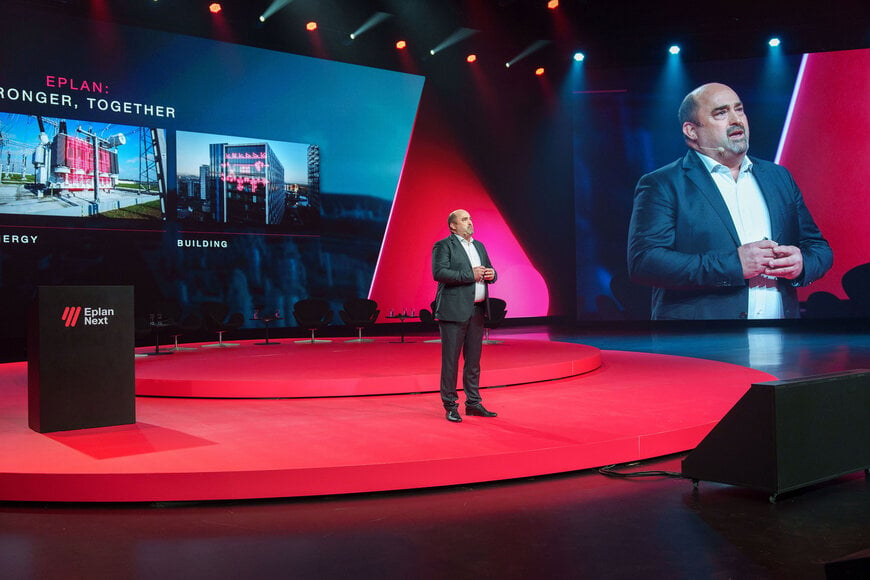
Eplan CEO Sebastian Seitz said in conclusion: “The future lies in cooperation and collaboration – this is the only way we can master the challenges of the future. The technologies are available. The crucial question is how we can consistently integrate these opportunities into our processes
